How I Forecast Kindergarten Costs Before They Hit — A Parent’s Real Talk
Remember the shock of your first kindergarten fee notice? I do — it hit like a surprise tax. What if you could see those costs coming years ahead? Using simple market forecasting, I started tracking early education trends, and it changed everything. No jargon, no crystal balls — just practical insights that helped me plan smarter, save stress, and avoid last-minute financial panic. This is how I stayed ahead. It wasn’t about becoming a financial expert; it was about treating early education like a predictable part of family budgeting. What began as a reaction to an unexpected bill grew into a strategy that reshaped how I manage our household’s future.
The First Bill That Changed My Mindset
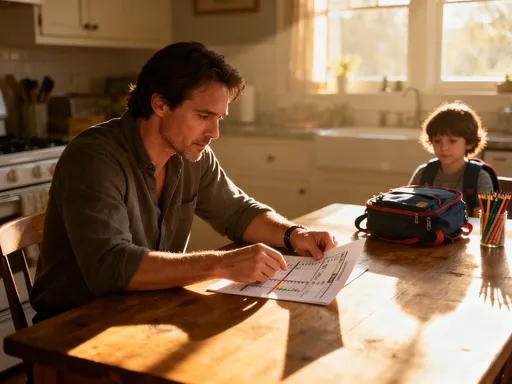
It arrived in April, just before summer break: a detailed invoice for the upcoming kindergarten year. The total was nearly 30 percent higher than what I had budgeted. I remember sitting at the kitchen table, staring at the numbers, trying to understand where I had gone wrong. I had assumed kindergarten was similar to preschool — a few hundred dollars a month, maybe a little more for supplies and field trips. But this wasn’t childcare. This was structured education with curriculum standards, certified teachers, extended hours, and premium facilities. The reality was clear: early education is not an incidental expense. It is a significant, recurring financial obligation that families must plan for like any other major household cost.
That moment forced me to shift my thinking. Instead of reacting to fees after they were announced, I decided to anticipate them. I asked myself: What causes these increases? Are they predictable? Can I prepare in advance? I began researching how school costs evolve over time. I learned that tuition at private kindergartens often rises faster than general inflation, driven by demand, operating expenses, and facility upgrades. Public programs, while subsidized, also face funding fluctuations that can affect class sizes, program availability, and even supply fees. My assumption that costs would remain stable — or rise only slightly — was not supported by the data.
This realization marked the beginning of a new approach. I stopped treating kindergarten as a one-time decision and started viewing it as part of a long-term financial journey. Just as homeowners monitor property taxes or retirees track healthcare premiums, parents need to track education costs. The first step was acknowledging that early learning is not just a developmental milestone — it’s a financial commitment with real economic forces behind it. Once I accepted that, I could begin to forecast, plan, and protect my family from avoidable financial strain.
What Market Forecasting Really Means for Parents
When most people hear “market forecasting,” they think of stock analysts, economic models, or Wall Street predictions. But forecasting isn’t just for investors. At its core, it’s about identifying patterns in data to make informed decisions about the future. For parents, this means paying attention to trends in education pricing, enrollment demand, and policy changes. You don’t need advanced math or financial training — just curiosity, consistency, and a willingness to collect information over time. What I discovered is that early education markets behave like other service industries: prices respond to supply and demand, inflation, labor costs, and regulatory shifts.
In my city, I noticed a clear pattern: private kindergartens adjusted their fees every two years, typically in alignment with local cost-of-living increases and real estate trends. When rental prices for commercial spaces went up, schools passed some of those costs to families. Similarly, when new state standards required additional teacher certifications or safety upgrades, tuition followed. I began gathering data from school brochures, open house presentations, and government education reports. I even monitored local news for stories about school expansions, closures, or policy debates. Over 18 months, I compiled a timeline that revealed a predictable cycle: fee increases tended to happen in the spring, ahead of fall enrollment, and were often announced with little warning.
This wasn’t about making perfect predictions. It was about reducing uncertainty. By understanding the rhythm of these changes, I could anticipate when a hike might occur and adjust my savings plan accordingly. For example, if most schools raised fees in March, I made it a habit to review tuition notices every February and update my projections. I also started comparing multiple schools, not just for quality but for pricing stability. Some institutions had a history of steady, moderate increases; others showed volatility. This information helped me weigh long-term affordability alongside educational fit. Forecasting, in this context, became a tool for empowerment — a way to replace anxiety with action.
Why Kindergarten Is More Than a School — It’s a Market
Kindergarten is often seen as the first step in a child’s academic journey. But behind the scenes, it operates within a broader economic ecosystem. As more families recognize the value of early learning, demand for quality programs has surged. This growing demand, combined with limited supply in many urban and suburban areas, has turned kindergarten enrollment into a competitive process — one that behaves much like a housing or labor market. When spots are scarce and interest is high, prices rise. This isn’t speculation; it’s basic economics.
I saw this firsthand when two new kindergartens opened within a mile of our home. One was a publicly funded program with income-based eligibility; the other was a private institution with a tuition-based model. Within days, the private school’s waiting list had over 100 families. The public option had even longer waitlists, with some parents registering their children at birth. The imbalance between supply and demand created upward pressure on prices. Even schools not directly involved in the expansion began adjusting their messaging, emphasizing small class sizes, specialized curricula, and enhanced safety measures — all features that justify higher fees.
This market dynamic isn’t unique to my city. National data shows that private early education costs have risen at an average rate of 4 to 6 percent per year over the past decade, outpacing general inflation. In high-demand areas, increases can exceed 8 percent annually. Public programs, while more stable, are not immune. When state budgets tighten, schools may reduce subsidies or shift costs to families through activity fees, technology charges, or extended-day premiums. Recognizing kindergarten as part of a functioning market changed how I approached enrollment. Instead of choosing a school based solely on proximity or reputation, I began evaluating it through a financial lens: How stable are their fees? What factors could influence future costs? Are there alternative options if prices rise unexpectedly?
This shift in perspective allowed me to plan with greater foresight. I started exploring backup schools early, even if I wasn’t planning to use them immediately. I looked into community-based programs, co-ops, and hybrid models that offered lower-cost alternatives without sacrificing educational quality. By treating kindergarten as a market, I gained the ability to anticipate shifts, compare value, and make decisions that balanced both learning outcomes and financial sustainability.
How to Track Early Education Trends Without Overcomplicating
One of the biggest barriers to forecasting is the fear of complexity. Many parents assume they need sophisticated tools or expert knowledge to track financial trends. But my experience shows that simplicity is more effective than precision. I built a basic tracking system using a spreadsheet — nothing fancy, just organized columns for school name, current tuition, fee increase history, enrollment deadlines, and notes on policy changes. Every six months, I updated it with new data from school websites, open houses, and parent forums. I also subscribed to city education department newsletters, which often included advance notices about funding adjustments, regulatory updates, or new program launches.
The goal wasn’t to create a perfect model. It was to establish a routine of awareness. Over time, patterns emerged. I noticed that schools tended to raise fees after facility renovations or when introducing new programs like bilingual instruction or STEM enrichment. I also saw that public announcements about charter school expansions or voucher programs often preceded price shifts in the private sector, as institutions adjusted to changing competition. These insights didn’t require advanced analytics — just consistent observation.
I also learned to pay attention to indirect signals. For example, rising commercial real estate prices in certain neighborhoods often preceded new private school openings — and subsequent tuition increases due to higher operating costs. Similarly, changes in local employment trends, such as an influx of tech companies or remote workers, could increase demand for early education in specific areas. By monitoring these broader economic indicators, I gained a more complete picture of what might affect kindergarten pricing in the coming years.
The key to successful tracking is consistency, not complexity. You don’t need to check every school in your region — just the ones you’re likely to consider. A few hours twice a year spent gathering and organizing information can yield valuable foresight. Over time, this practice reduced my anxiety about unexpected costs and gave me confidence that I was making informed choices. Forecasting became less about prediction and more about preparation — a habit that strengthened my ability to manage not just education expenses, but other long-term family costs as well.
Smart Savings Strategies That Match Forecasted Costs
Once I had a clearer picture of likely tuition increases, I adjusted how I saved. Instead of setting a fixed monthly amount, I aligned my contributions with expected cost changes. For example, if data showed that most schools raised fees in September, I increased my savings rate in the spring and early summer. This seasonal approach ensured that I had the necessary funds available when bills arrived, without relying on credit or emergency withdrawals. I set up automatic transfers to a dedicated education savings account, making the process effortless and consistent.
I also adopted a tiered savings model. A base amount went into the account every month, covering the current year’s tuition. An additional buffer was added based on forecasted increases — typically 5 to 7 percent annually, adjusted for local trends. This buffer acted as a financial cushion, protecting us from sudden hikes or unexpected fees. I treated this account like a utility bill: non-negotiable, prioritized, and separate from discretionary spending. Because the money was automatically transferred and not easily accessible, I was less tempted to use it for other purposes.
Another strategy I used was forward-looking budgeting. Each January, I projected tuition costs for the next three to five years based on historical trends and current market conditions. This long-term view helped me identify when we might need to increase savings, explore financial aid, or consider alternative programs. It also allowed me to integrate kindergarten costs into broader family financial goals, such as home ownership, retirement planning, or college savings. By seeing early education as part of a continuum, I avoided treating it as an isolated expense.
These strategies didn’t eliminate cost increases — nothing can — but they reduced their impact. I no longer felt blindsided by invoices. Instead, I felt in control. The combination of forecasting and strategic saving transformed a source of stress into a manageable, predictable part of our budget. More importantly, it gave me peace of mind knowing that my child’s education was financially secure, regardless of market fluctuations.
Avoiding the Traps: When Forecasting Goes Wrong
Forecasting is not a guarantee. I’ve made mistakes, and some assumptions didn’t pan out. One of the most significant errors was assuming that the opening of a new public kindergarten would reduce demand — and therefore prices — at nearby private schools. I expected competition to drive down costs. Instead, demand remained strong across both sectors. Families weren’t choosing one over the other; many applied to both, hoping to secure a spot anywhere. The private schools, facing no drop in enrollment, maintained or even increased their fees. My forecast failed because I underestimated the depth of demand and overestimated the substitutability between public and private options.
Another misstep involved location. I once chose a school in a neighborhood that was undergoing slow development, assuming that lower real estate values would keep tuition stable. However, when the area began to attract young professionals, demand surged unexpectedly. The school responded with a 12 percent fee increase the following year — far above the city average. I had not accounted for rapid demographic shifts or the lag between neighborhood change and institutional pricing. This taught me that local trends can evolve faster than data collection cycles.
These experiences were humbling, but they also strengthened my approach. I learned that forecasting is not about achieving certainty — it’s about managing risk. Now, I build flexibility into my plans. I maintain a larger buffer in my savings account, consider multiple scenarios (moderate, high, and low growth), and revisit my assumptions annually. I also diversify my options, keeping a list of alternative schools and programs in case my first choice becomes unaffordable. Most importantly, I accept that some variables are beyond prediction. The goal is not to be right every time, but to be prepared for different outcomes.
Turning Insights into Long-Term Financial Confidence
Forecasting kindergarten costs did more than help me budget — it changed my entire mindset about family finances. I now apply the same principles to other recurring expenses: healthcare premiums, extracurricular activities, summer camps, and even future college planning. The habit of looking ahead, asking “what’s next,” and preparing early has made me a calmer, more confident parent. I no longer wait for bills to arrive before reacting. Instead, I anticipate them, plan for them, and manage them proactively.
This approach has also improved communication with my partner. We now have regular financial check-ins where we review upcoming costs, adjust savings goals, and discuss long-term priorities. These conversations used to feel stressful; now they feel productive. We’re no longer caught off guard by seasonal expenses or annual increases. We see them coming — and we’re ready.
Perhaps the most valuable outcome has been the sense of control it brings. Parenting is full of uncertainties, but finances don’t have to be one of them. By treating early education as a predictable expense and using simple forecasting techniques, I’ve turned a potential source of stress into a structured, manageable process. It’s not about predicting every detail or achieving perfect accuracy. It’s about being informed, being prepared, and being in charge of your family’s financial well-being. That peace of mind is worth far more than any single tuition payment.