You Won’t Believe What I Found in Amritsar’s Hidden Public Spaces
Amritsar, India, is more than just the home of the Golden Temple. Beyond the spiritual heart of Sikhism, the city pulses with life in its overlooked public spaces—where morning walkers greet each other by name, street vendors brew chai with rhythmic precision, and elders play chess under ancient banyan trees. These everyday spaces reveal the true soul of the city. What makes them special isn’t grand design, but the quiet magic of community. In a world where travel often focuses on monuments, Amritsar teaches us to look closer. It’s in the shared benches, open courtyards, and neighborhood squares where real connection happens—simple, warm, and deeply human.
The Golden Temple’s Outer Courtyards: More Than a Pilgrimage Path
The Harmandir Sahib, commonly known as the Golden Temple, draws millions of visitors each year, not only for its shimmering beauty but for its profound spiritual aura. Yet beyond the sanctum and the sacred pool, the outer courtyards tell a quieter, equally powerful story—one of daily community life unfolding in public view. Long before the morning prayers begin, the wide marble pathways are already alive with movement. Families arrive in small clusters, some pausing to remove their shoes, others settling onto low stone ledges to wait. These unassuming edges of the complex, often overlooked by first-time visitors, function as vital social zones where people rest, talk, and reconnect.
What makes these spaces so effective is their openness and accessibility. There are no gates restricting entry, no designated hours limiting presence. The design itself promotes inclusion—wide walkways accommodate wheelchairs and strollers alike, while shallow steps and gentle slopes allow elders and children to navigate with ease. Volunteers circulate with trays of water and towels, offering refreshment to all regardless of background. This culture of service, rooted in Sikh principles of seva (selfless service), transforms what could be a purely ceremonial space into a living, breathing public forum. It’s not uncommon to see a businessman in a suit sitting beside a laborer on a shared bench, both sipping water offered by the same volunteer.
At the heart of this communal experience is the langar, the temple’s free community kitchen that serves over 100,000 meals daily. The dining hall is vast, with rows of floor seating that erase distinctions of class, religion, or status. Everyone sits together on the same level, eats the same food, and clears their own plates. This daily ritual is more than an act of charity—it is a powerful social equalizer. The langar doesn’t just feed bodies; it strengthens the social fabric by reinforcing shared humanity. Travelers often come to the Golden Temple seeking spiritual insight, but many leave having witnessed something equally profound: the quiet dignity of collective belonging.
Gobindgarh Fort: From Military Past to Community Playground
Once a stronghold of Maharaja Ranjit Singh’s empire, Gobindgarh Fort has undergone a remarkable transformation. Built in the 18th century as a defensive fortress, it once housed armories, barracks, and watchtowers designed for military readiness. Today, its red sandstone walls enclose a different kind of energy—one of laughter, music, and leisure. After a careful redevelopment project completed in the 2010s, the fort reopened not as a static museum but as a dynamic public space where history and daily life coexist in harmony.
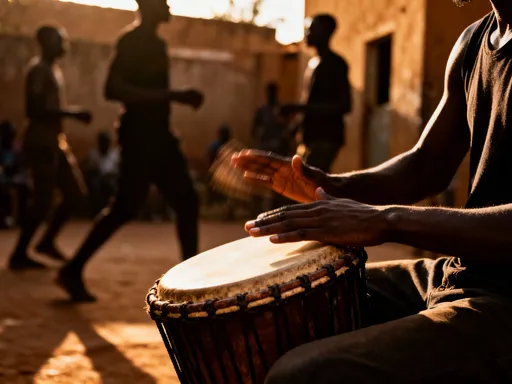
The fort now features open plazas, shaded walkways, and dedicated performance areas that host cultural events almost every weekend. In the evenings, families stream in through the main gates, children racing ahead to the play zones while parents follow with picnic baskets. Teenagers gather near the amphitheater, recording dance videos or listening to live folk performances. The sound of dhol drums often echoes against the ancient walls, blending tradition with contemporary joy. What was once a site of strategy and secrecy now pulses with the rhythms of community celebration.
This evolution did not come at the cost of historical integrity. Restoration efforts preserved key structures like the Naubat Khana (drum house) and the Diwan-e-Aam (hall of public audience), allowing visitors to walk through reconstructed royal chambers and armory displays. At the same time, modern amenities—clean restrooms, drinking water stations, and clear signage—make the space welcoming to all. The balance is deliberate: heritage is not locked behind glass but integrated into lived experience. Locals don’t visit the fort merely to observe history; they claim it as their own, using it for walks, photo sessions, and even informal cricket matches in the courtyard.
Gobindgarh Fort exemplifies how historical sites can serve dual roles—as custodians of the past and catalysts for present-day connection. Its success lies in accessibility: entry fees remain low, and events are often free or subsidized. This ensures that the space remains inclusive, drawing people from every neighborhood, not just tourists or the affluent. In reimagining a military structure as a people’s park, Amritsar offers a model other cities might follow—preserving history without freezing it in time.
The Charm of Chaugan: Amritsar’s Urban Green Lung
Nestled in the heart of the city, Chaugan is a rare expanse of open green space where Amritsar’s residents gather to breathe, play, and unwind. Once used as a polo ground during British colonial times, this large rectangular field has evolved into a multi-use public ground that serves joggers, students, athletes, and families alike. Unlike manicured city parks in other parts of the world, Chaugan feels organic—its grass worn in patches, its boundaries marked by simple iron fencing and mature trees that offer dappled shade. There are no grand fountains or playground equipment, yet its simplicity is precisely what makes it beloved.
By early morning, the field is dotted with runners and walkers, many following the same routes day after day. Yoga groups assemble near the eastern edge, their mats aligned in neat rows as instructors guide gentle stretches under the rising sun. Students from nearby colleges spread textbooks on benches, studying between classes with the quiet hum of city life in the background. As the day progresses, the space shifts in function—by late afternoon, informal cricket matches spring up, with teams made up of local youth using water bottles as stumps and rolled-up socks as balls.
In the evenings, Chaugan becomes a social hub. Families arrive with young children, pushing strollers or letting toddlers chase pigeons across the grass. Street food vendors set up near the perimeter, offering hot samosas, sweet lassi, and steaming cups of masala chai. The scent of cumin and fried dough mingles with the evening breeze. Teenagers gather in small circles, sharing stories and smartphones, while elders sit on benches, watching the world go by with quiet satisfaction. This layered use of space—where education, exercise, play, and conversation coexist—reflects the true versatility of well-loved public areas.
What makes Chaugan particularly significant is its role as a green lung in a densely built urban environment. With limited parks and increasing traffic congestion, such open spaces are vital for both physical and mental well-being. Residents treat Chaugan not as a distant destination but as a neighborhood asset, something to be used daily rather than reserved for special occasions. Its enduring popularity speaks to a deeper truth: people don’t need luxury to feel welcome. They need space, shade, and the freedom to be together.
Street Corners and Chai Stalls: The Unofficial Social Hubs
While formal parks and plazas capture attention, some of Amritsar’s most vibrant public life unfolds in the smallest, most unassuming places—street corners, footpath clearings, and clusters around chai stalls. These micro-spaces, often overlooked in urban planning, are where the city’s social pulse is most clearly felt. A simple concrete ledge, a few plastic stools, and a kettle of boiling milk and tea leaves are all it takes to create a hub of connection. Here, time slows down. Conversations meander. Relationships deepen not through grand gestures, but through daily presence.
At any given chai stall, one might find rickshaw drivers debating the morning news, shopkeepers catching up between deliveries, or students reviewing lessons with friends. The tea itself is secondary to the ritual—the way the vendor knows each regular by name, the way neighbors greet each other with a nod or a joke. These interactions form the invisible threads of trust that hold communities together. There are no membership rules, no entry fees, no schedules. Anyone can sit, anyone can speak, and everyone belongs.
What makes these spaces resilient is their organic nature. They were not designed by architects or approved by city councils; they emerged from need and repetition. Over time, certain corners became known as meeting points—not because of signs or advertisements, but because people kept returning. A chai stall near the textile market becomes a hub for tailors during lunch breaks. Another near a school sees a surge of parents waiting to pick up children. These rhythms are unspoken but deeply understood.
In contrast to sterile, over-designed urban plazas that often feel unwelcoming or underused, these informal hubs thrive because they serve real human needs. They offer not just refreshment but continuity—a sense of place and belonging that persists across years. Travelers who seek only the iconic sights may miss these corners entirely, yet they are where Amritsar’s warmth is most authentically felt. In a world increasingly dominated by digital interaction, these physical, face-to-face spaces remind us of the enduring value of proximity and presence.
Design That Invites: What Makes Amritsar’s Public Spaces Work
Amritsar’s public spaces succeed not because of grand budgets or international architects, but because of subtle, human-centered design choices—many of which emerged intuitively rather than through formal planning. Seating is abundant, often integrated into the landscape in ways that feel natural: low stone walls along pathways, shaded benches beneath trees, and steps that double as resting spots. These features invite people to linger, to pause, to engage. In contrast to urban plazas elsewhere that prioritize aesthetics over function—wide open stretches with nowhere to sit—Amritsar’s spaces understand that comfort is essential to connection.
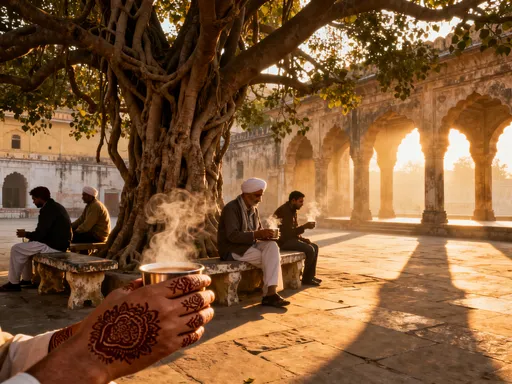
Shade is another critical element. The city’s intense summer sun makes shaded walkways and tree-lined paths not just pleasant but necessary. Banyan and peepal trees, often centuries old, provide natural canopies where people gather even during the hottest parts of the day. These trees are not merely decorative; they are functional infrastructure, offering relief and encouraging longer stays. In many neighborhoods, small shrines or water fountains are placed beneath them, further enhancing their role as rest points and social nodes.
Proximity also plays a key role. Most public spaces in Amritsar are located within walking distance of homes, markets, temples, and schools. This integration into daily routines ensures high foot traffic and constant use. A park isn’t a destination you drive to on weekends; it’s a place you pass on your way to the grocery store or your child’s school. This ease of access fosters routine interaction, turning strangers into familiar faces and eventually into neighbors.
Perhaps most importantly, these spaces are designed for inclusivity. There are no barriers—physical or social—that exclude certain groups. Women, children, elders, and people with disabilities all appear in these spaces, using them freely and safely. This sense of universal welcome does not happen by accident; it is nurtured through cultural norms of hospitality and reinforced by the physical layout. When a city is built with the understanding that public space belongs to everyone, it naturally becomes a place where everyone feels they belong.
A Day in the Life: Mapping Movement Through Public Spaces
To understand the rhythm of Amritsar’s public life, one need only follow the flow of a single day. At dawn, the first stirrings begin near the Golden Temple, where early risers gather for prayers or a quiet walk along the parikrama (circumambulatory path). The air is cool, the light soft. Volunteers pass out warm blankets to those sitting on the marble, and the scent of incense drifts from the sanctum. Nearby, chai vendors light their stoves, preparing the first brews of the day. This is a time of reflection, but also of quiet conversation—between pilgrims, between friends, between strangers who have met here many times before.
By mid-morning, activity spreads outward. Joggers take to the paths in Chaugan, their footsteps rhythmic against the dew-damp grass. Students head to libraries or sit under trees with notebooks, preparing for exams. Market lanes come alive as shopkeepers unlock iron grilles, arranging produce and textiles in neat displays. Chai stalls near bus stops fill with commuters, each taking a few minutes to pause before the day’s work. These moments of stillness, brief as they may be, are essential—they anchor the day in human connection rather than mere movement.
In the afternoon, the city slows slightly under the heat. Elders retreat to shaded courtyards, playing chess or cards with friends. Children return from school, racing to playgrounds or joining pickup games in open lots. Women gather in neighborhood squares, exchanging news while waiting for bread from the local tandoor. These interactions are not planned; they emerge from the simple fact that people are present, visible, and accessible to one another.
As evening falls, the tempo rises again. Families head to Gobindgarh Fort or Chaugan for leisure time. Teenagers meet at street corners, sharing snacks and music. The Golden Temple’s outer courtyards fill once more, this time with visitors drawn by the beauty of the illuminated shrine. The sound of evening prayers blends with the chatter of children and the clinking of tea cups. The city does not shut down; it transforms. Public spaces remain active, adapting to the needs of each hour. This continuity—this unbroken thread of shared presence—is what gives Amritsar its distinctive character.
Lessons for the World: Why Amritsar’s Model Matters
In an era of rapid urbanization, where cities are often designed for efficiency rather than humanity, Amritsar offers a quiet but powerful alternative. Its public spaces are not the result of high-tech master plans or billion-dollar developments. They are shaped by tradition, necessity, and a deep cultural emphasis on community. What emerges is not perfection, but authenticity—a city where people feel at home in the streets, where belonging is not earned but assumed.
The lessons here are universal. First, accessibility matters. When spaces are easy to reach, open to all, and free of barriers, they become truly public. Second, design should serve people, not just aesthetics. Benches, shade, and clean facilities may seem minor, but they determine whether a space is used or avoided. Third, continuity fosters connection. When people encounter one another regularly—morning after morning, evening after evening—trust grows naturally.
For travelers, this means looking beyond the postcard sights. The soul of a place is often found not in its monuments but in its markets, corners, and courtyards. For urban planners, it suggests that the most successful public spaces are not always the most expensive, but the most inclusive. Vitality comes not from grandeur, but from the small, repeated acts of gathering, sharing, and simply being together.
Amritsar does not offer a blueprint to be copied exactly. Every city has its own history, climate, and culture. But it does offer a principle worth remembering: that the heart of urban life beats strongest in the spaces where people are free to linger, to connect, and to belong. In a world that often feels fragmented, these quiet moments of togetherness may be the most valuable treasures of all.