You Won’t Believe What I Found in Athens’ Hidden Public Spaces
Athens isn’t just ancient ruins and crowded tourist trails—there’s a quieter, more personal side hiding in plain sight. I stumbled upon serene public spaces where locals unwind, from tucked-away gardens to sun-drenched plazas. These spots revealed the city’s soul in ways museums never could. If you're chasing authenticity over checklists, this is where Athens truly comes alive. Away from the postcard-perfect images of the Acropolis, the city breathes through its parks, squares, and pedestrian lanes—places where time slows, laughter lingers, and everyday life unfolds in full color. This is not a city preserved behind glass; it’s one lived in, loved, and shared.
The Other Side of Athens: Beyond the Acropolis
Athens dazzles visitors with its golden-hued monuments, and rightly so—the Parthenon stands as a timeless testament to human achievement. Yet, for every traveler who ascends the sacred rock of the Acropolis, few pause to notice the quiet squares nestled in its shadow, where Athenians gather not for spectacle, but for life. These public spaces—often overlooked in guidebooks—are where the city reveals its softer rhythm. While tourists navigate winding paths up ancient stone, locals sip frappés under plane trees, children chase pigeons across cobblestones, and elders play backgammon with practiced ease. This parallel Athens exists not in opposition to its historic identity, but as its living extension.
The contrast between the two sides of Athens is not one of conflict, but of complement. Monuments speak of glory past; public spaces speak of continuity. In neighborhoods like Kolonaki, Pangrati, and Thiseio, small plazas function as communal living rooms—unofficial, unstructured, and deeply cherished. These areas are rarely featured on highlight reels, yet they offer a more intimate understanding of urban Greek life. Unlike the curated experience of archaeological sites, these spaces are unguarded and unscripted. There is no admission fee, no timed entry, no velvet rope. What you find here is spontaneous, genuine, and refreshingly unpolished.
Shifting focus from landmarks to landscapes of daily life enriches travel in profound ways. It invites presence over performance. Instead of ticking off sights, you begin to feel the pulse of the city. You notice how sunlight filters through vine-covered pergolas in mid-afternoon, how neighbors greet each other by name, how a stray cat finds its way onto a regular’s lap. These are the moments that linger long after the photos fade. By choosing to wander beyond the well-trodden routes, travelers gain access to a version of Athens that is not sold, but shared.
Why Public Spaces Matter in a Historic City
In a city so deeply rooted in history, public spaces serve as vital bridges between eras. They are not merely decorative add-ons to urban planning but essential components of social and cultural life. In Athens, these areas function as the city’s social lungs—places where residents inhale calm, exhale stress, and exchange stories across generations. They offer respite from the density of city living, where apartments are compact and private outdoor space is limited. More than convenience, these spaces are cultural necessities, deeply woven into the fabric of Athenian identity.
Historically, the concept of shared civic space dates back to ancient Greece, where the agora served as a hub for commerce, debate, and community. Today’s parks and plazas echo that tradition, albeit in modern form. They are where informal democracy unfolds—where ideas are exchanged over coffee, where protests begin with a single sign, where children learn to navigate social rules through play. The continuity is subtle but powerful: Athenians still gather in open spaces to connect, reflect, and belong.
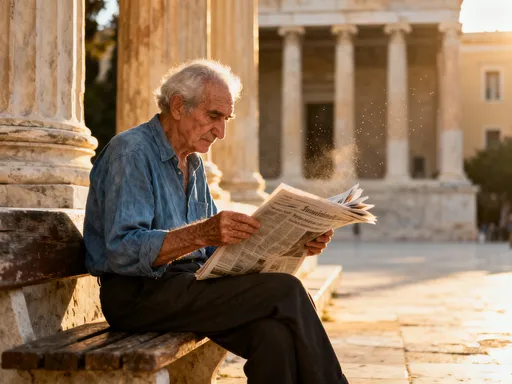
Modern usage reflects both tradition and adaptation. In the mornings, retirees gather in shaded corners with newspapers and thermoses of Greek coffee. By midday, young professionals take lunch breaks on benches, headphones in but eyes alert to the passing scene. In the evenings, families stroll, couples sit close, and street musicians add gentle soundtracks to the fading light. These patterns are not orchestrated; they emerge naturally from a culture that values leisure, conversation, and presence. Public spaces in Athens are not destinations in themselves, but settings for life as it is lived.
Moreover, these areas contribute to the city’s resilience. Amid economic fluctuations and urban pressures, accessible green and open spaces provide psychological relief and social cohesion. They are democratic by design—open to all, regardless of background or income. In a city that has faced significant challenges in recent decades, these pockets of calm stand as quiet acts of resistance against haste, isolation, and disconnection. They remind residents and visitors alike that community is not built in grand gestures, but in small, repeated moments of shared space.
Kolonaki Square: Elegance in Simplicity
Tucked into one of Athens’ most upscale neighborhoods, Kolonaki Square offers a study in understated charm. Surrounded by neoclassical buildings with peeling pastel facades and wrought-iron balconies, the square feels like a secret whispered among friends. It is never crowded, rarely noisy, and always alive in a gentle, unhurried way. Benches shaded by plane trees line the central garden, where a small fountain trickles softly, more for ambiance than display. This is not a place for grand events or tourist snapshots—it is a neighborhood anchor, a place where locals return again and again, drawn by its quiet consistency.
The sensory experience here is subtle but rich. The air carries the aroma of freshly ground coffee from nearby cafés, mingling with the faint scent of jasmine from a neighbor’s balcony. The sound of laughter drifts from a corner table where friends share dessert, while the clink of spoon against glass signals another frappé being stirred. Children chase each other in slow loops around the fountain, careful not to stray too far from watchful eyes. Time moves differently here—slower, softer, more deliberate. It is easy to sit for an hour and feel as though only minutes have passed.
What makes Kolonaki Square special is not its size or grandeur, but its authenticity. There are no souvenir stands, no guided tours, no loudspeakers blaring commentary. Locals come here not to perform, but to be. A woman reads a novel in Greek, turning pages with care. An older man feeds crumbs to pigeons, murmuring to them as if they were old acquaintances. A couple shares a single espresso, speaking in low tones. These moments are not staged; they are simply part of the square’s daily rhythm.
For visitors, the best time to experience Kolonaki Square is late afternoon, just before sunset. The light turns golden, casting long shadows across the cobblestones, and the temperature cools after the summer heat. To blend in naturally, come without a camera in hand, sit quietly, and observe. Order a drink from one of the surrounding cafés and take your time. Avoid loud conversations or hurried movements. Respect the pace. This is not a place to conquer, but to inhabit. By doing so, you become part of the scene, not just a spectator of it.
The National Garden: An Urban Oasis
Just a five-minute walk from the bustling Syntagma Square lies one of Athens’ most remarkable public treasures—the National Garden. Spanning 15.5 hectares, this lush expanse of greenery feels like a hidden world, insulated from the city’s noise and pace. Originally designed in the 1830s as a private garden for Queen Amalia, it was opened to the public in 1928 and has since become a sanctuary for both residents and visitors. With over 700 plant species, winding gravel paths, and the occasional peacock strutting through the foliage, the garden offers a rare immersion in nature within an urban core.
Walking through the National Garden is a multisensory journey. The crunch of gravel underfoot, the dappled sunlight filtering through tall palm and cypress trees, the sudden glimpse of a turtle basking near a small pond—all contribute to a sense of calm. Benches are thoughtfully placed beneath shaded canopies, inviting rest and reflection. Families picnic on blankets, students read under trees, and joggers move quietly along the perimeter. Unlike manicured European gardens that prioritize symmetry, this space feels organic, almost wild in places, as though nature has been gently guided rather than controlled.
One of the garden’s quiet joys is its wildlife. Turtles, both native and rescued, live in protected enclosures near the central pond, drawing curious onlookers, especially children. Butterflies flit between flowering shrubs, and birdsong replaces the usual city hum. Near the southern entrance, a small botanical museum offers insights into the garden’s history and plant life, though many visitors pass it by, preferring the unstructured exploration of the grounds. There is no need for a map; the paths encourage wandering, not efficiency.
To truly appreciate the garden’s quieter corners, enter from the eastern or southern gates, which see fewer visitors than the main entrance off Amalias Avenue. Early morning is ideal—between 7:00 and 9:00 a.m.—when the air is cool and dew still glistens on leaves. Weekdays are less crowded than weekends, offering a more intimate experience. Bring water, wear comfortable shoes, and allow at least an hour to wander without agenda. The garden is not a checklist item; it is a place to reset, to breathe, to remember that cities can hold pockets of peace.
Pedestrian Plazas in Plaka: Where History Meets Daily Life
The Plaka district, nestled on the slopes of the Acropolis, is one of Athens’ oldest neighborhoods, and its pedestrian plazas exemplify how historic urban design can support modern community life. Unlike many tourist-heavy areas that feel sanitized or performative, Plaka’s open spaces retain a lived-in quality. Cobblestone courtyards, once private yards of Ottoman-era homes, have been transformed into public seating areas surrounded by tavernas, boutiques, and flower-filled planters. These plazas are not museums—they are working parts of the neighborhood, where tourism and daily life coexist with surprising harmony.
One such space is Anafiotika Square, a tiny, sun-drenched clearing tucked behind narrow staircases and whitewashed houses reminiscent of the Cyclades. Here, a single café with a handful of tables serves travelers and locals alike. In the mornings, residents walk their dogs through the plaza; in the evenings, visitors linger over wine as guitar music drifts from a nearby street performer. The scale is human, the pace unhurried. Because vehicles are banned, the only sounds are footsteps, conversation, and the occasional jingle of a shop bell.
What makes these plazas successful is their adaptability. During the day, tables are spaced generously, allowing families to spread out. By night, the same spaces become intimate dining areas, lit by soft lanterns. Street vendors sell handmade crafts without overwhelming the scene. There are no loudspeakers, no flashing signs—just the natural ebb and flow of people. This balance between commercial use and communal comfort is rare in historic districts, where tourism often displaces local life. In Plaka, the two coexist because the space was designed for people, not profit.
For visitors, the key to enjoying these plazas is mindfulness. Sit at a café not because it’s famous, but because it feels right. Order a glass of local wine or a slice of watermelon in season. Watch how locals use the space—where they sit, how they greet each other, when they come and go. You’ll notice patterns: the elderly couple who arrives at 4:00 p.m. every day, the shop owner who sweeps his doorstep like a ritual, the children who play tag between tables. These are the quiet rhythms of place, invisible to the hurried eye but rich with meaning for those who pause.
Philopappos Hill: A Public Space with a View
Rising gently behind the Acropolis, Philopappos Hill offers one of Athens’ most rewarding public experiences—not because of what it is, but how it is used. This green hillside park provides panoramic views of the city, with the Parthenon framed perfectly against the sky. Yet, it is not a viewpoint in the traditional sense. There are no ticket booths, no guided tours, no souvenir stalls. Instead, it is a place of organic gathering, where Athenians come to walk, talk, play, and simply be. Families spread blankets for picnics, couples stroll hand in hand, and kite flyers take advantage of the steady breeze.
Mornings here are especially serene. Joggers trace the winding paths, their breath steady, their pace unhurried. Birdwatchers scan the treetops for warblers and finches, while photographers set up tripods for sunrise shots of the Acropolis. As the day warms, children race down grassy slopes, their laughter echoing across the hill. In the summer months, open-air film screenings are held near the Philopappos Monument, drawing crowds with blankets and snacks. These events are low-key, community-driven, and free—true expressions of public culture.
What sets Philopappos apart is its accessibility and lack of pretense. There are multiple entry points, but the least crowded ones come from the Thiseio neighborhood, via quiet residential streets. The path from Apostolou Pavlou Avenue is well-paved and gentle, suitable for strollers and older visitors. Benches are scattered throughout, many placed to face the view, inviting pause and reflection. Unlike more commercial viewpoints, there is no pressure to consume—no café, no gift shop, no admission fee. You come not to buy, but to experience.
For the best photo opportunities, arrive an hour before sunset. The light turns warm, the shadows lengthen, and the city below begins to sparkle. But beyond photography, the hill offers something more valuable: perspective. Standing here, you see Athens not as a collection of monuments, but as a living, breathing city. You understand how history and modernity coexist, how nature and urban life intertwine. It is a reminder that beauty is not only in the grand, but in the everyday spaces we share.
Designing Your Own Athens Experience: From Observation to Participation
Travel transforms when we move from observation to participation. In Athens, this shift begins with how we engage with public spaces. Rather than rushing from site to site, consider slowing down—sitting on a bench without checking your phone, ordering a drink and staying for an hour, watching how locals move through their day. These small acts of presence open doors to deeper connection. You begin to see not just the city, but its people. You notice how a man tips his hat to a neighbor, how a child is scolded gently in Greek, how a street vendor shares a joke with a regular customer.
Respectful engagement is key. This does not mean intruding on private moments, but learning to be a quiet observer. Sit where locals sit. Speak softly. Dress comfortably but modestly. Avoid loud conversations or excessive photography, especially in residential areas. When in doubt, follow the lead of those around you. If everyone is sitting quietly, don’t play music from your phone. If a plaza feels like a neighborhood living room, treat it as such—with care and consideration.
Slow travel is not about doing less; it’s about experiencing more. In Athens, this means allowing space—both physical and mental—for discovery. Let yourself get lost in a side street. Accept an invitation to join a backgammon game, even if you don’t know the rules. Smile at a shopkeeper. These gestures, small as they seem, build bridges. They signal that you are not just passing through, but seeking to understand.
The public spaces of Athens are not just places to visit—they are invitations to belong, however briefly. They reveal a city that is proud of its past but deeply engaged in its present. They show that history is not confined to ruins, but lives in the way people gather, laugh, and share space. By embracing these moments, travelers do more than see Athens—they feel it. And in that feeling, a checklist becomes a connection, a trip becomes a memory, and a city reveals its truest self.